
MPPT Hybrid Solar Inverter Project – Dual Solar & AC Charging System
Original price was: ₹7,500.00.₹5,800.00Current price is: ₹5,800.00.
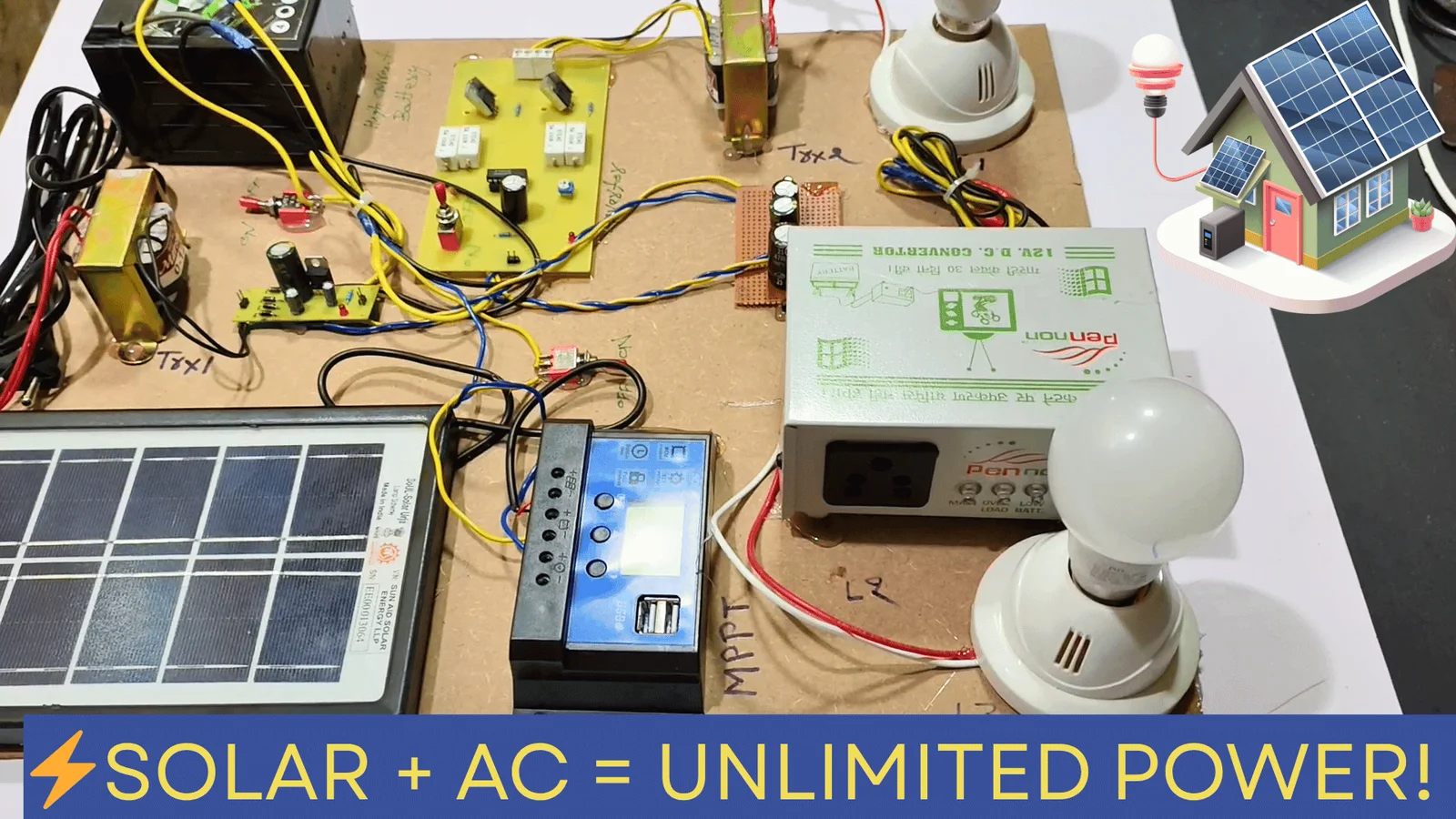
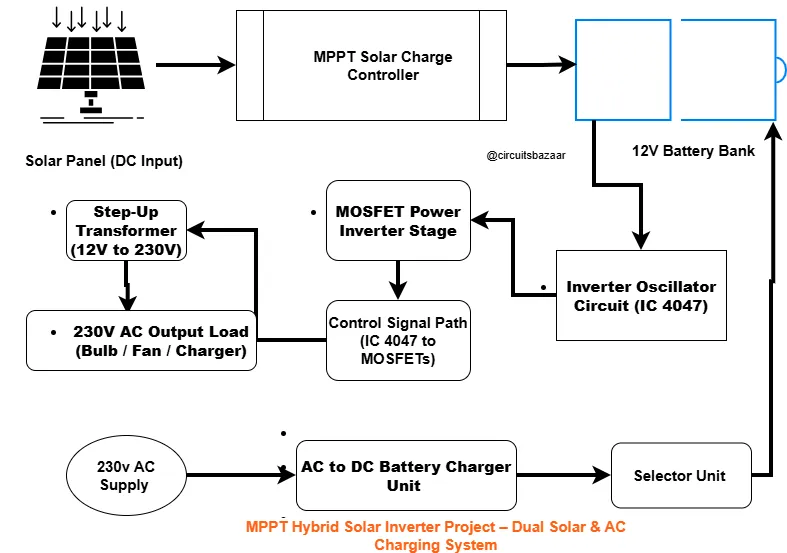
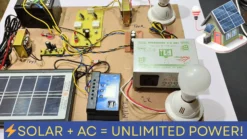
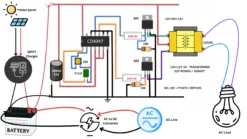
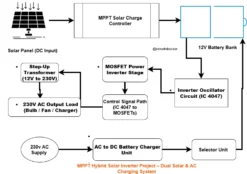
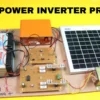
This MPPT Hybrid Solar Inverter Project is a ready-to-use renewable energy system designed to demonstrate dual battery charging using solar energy and AC mains ⚡🌞🔋. The project uses an MPPT solar charge controller to efficiently extract maximum power from the solar panel and charge a 12V battery system. When sunlight is not available, the system automatically switches to AC charging mode, ensuring uninterrupted power supply for continuous operation 🔌📊.
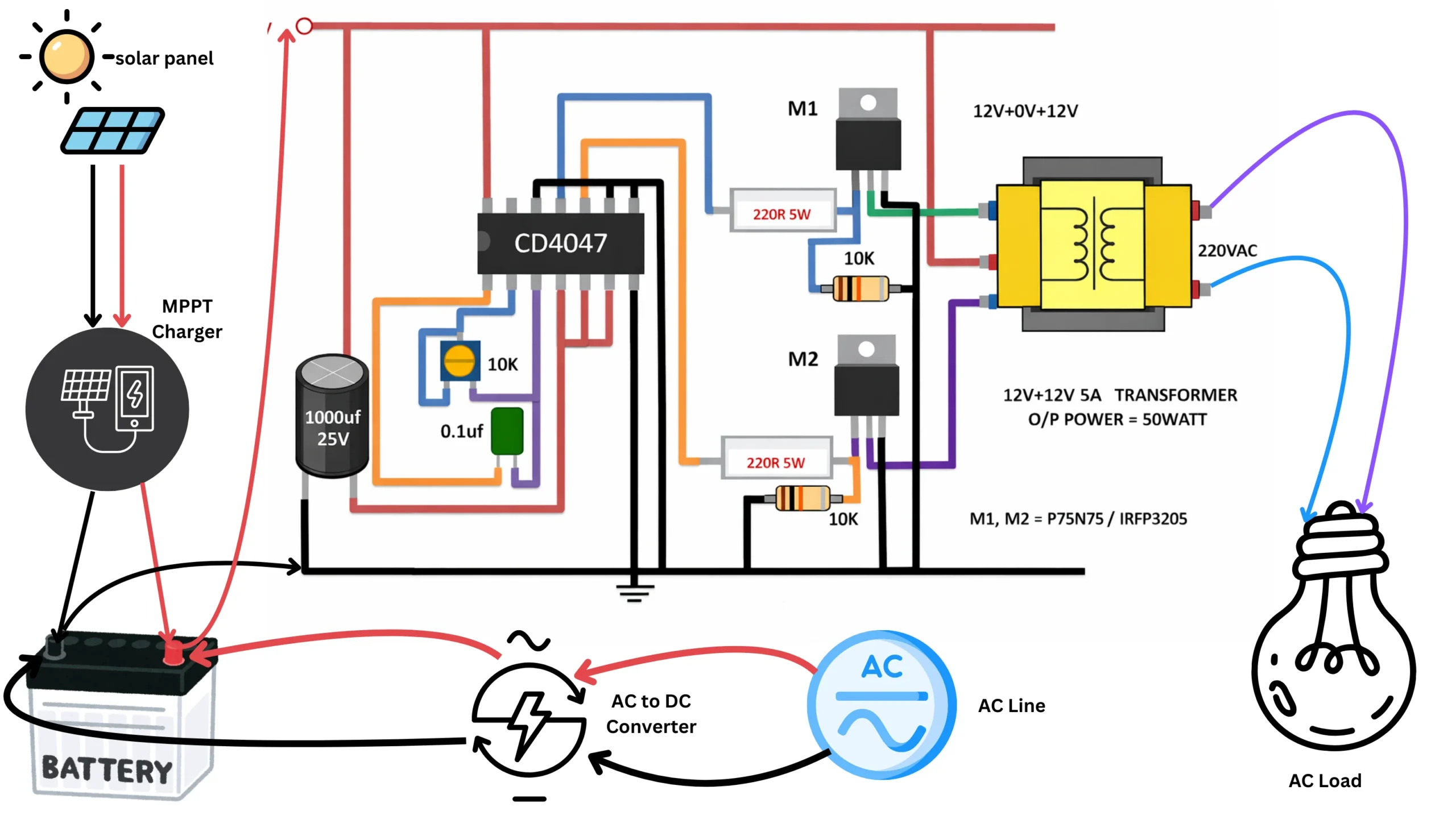
The stored energy is converted into a stable 230V AC output using a MOSFET-based inverter circuit with IC 4047, allowing students to run real electrical loads such as bulbs, fans, and mobile chargers 📽️💡. This project is ideal for B.Tech, Diploma, Polytechnic, ITI, and school students seeking a fully assembled, evaluation-ready hardware project for final-year submission, viva, exhibitions, and renewable energy demonstrations 🧠✅🚀.
37 in stock
Overview
The Hybrid Solar Inverter Project demonstrates a practical and real-world renewable energy power conversion system that operates using both solar energy and AC mains. The project focuses on reliable power availability by intelligently managing charging sources while delivering a stable 230V AC output for real electrical loads ⚡🌞. It is designed specifically for students who want to understand how modern hybrid power systems are implemented without getting lost in complex theory or calculations.
What You Will Receive
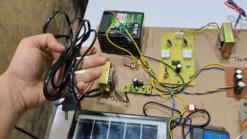
This project is delivered as a fully assembled and tested hardware system, ready for immediate use 🧰📦. Students receive complete project documentation, including a detailed synopsis, presentation slides, and report files that are structured for academic submission. Demonstration videos are provided to help students understand system operation quickly, along with guidance support to ensure smooth usage during viva or evaluations.
How This Project Helps Students
The project is designed to boost viva confidence and simplify evaluation by providing a clear, working demonstration of a hybrid solar power system 🧠✅. Students gain practical exposure to battery charging, inverter operation, and energy management concepts without spending weeks on fabrication. This saves time, improves presentation quality, and helps students clearly explain system functionality during assessments and exhibitions.
Applications & Use Cases
This hybrid solar inverter system is suitable for academic labs, renewable energy demonstrations, science exhibitions, and innovation showcases 📌🔋. It is widely used in final-year engineering projects, diploma practicals, and training programs focused on sustainable energy. The system also reflects real-world hybrid inverter principles used in residential and small off-grid power setups.
Why Choose This Project
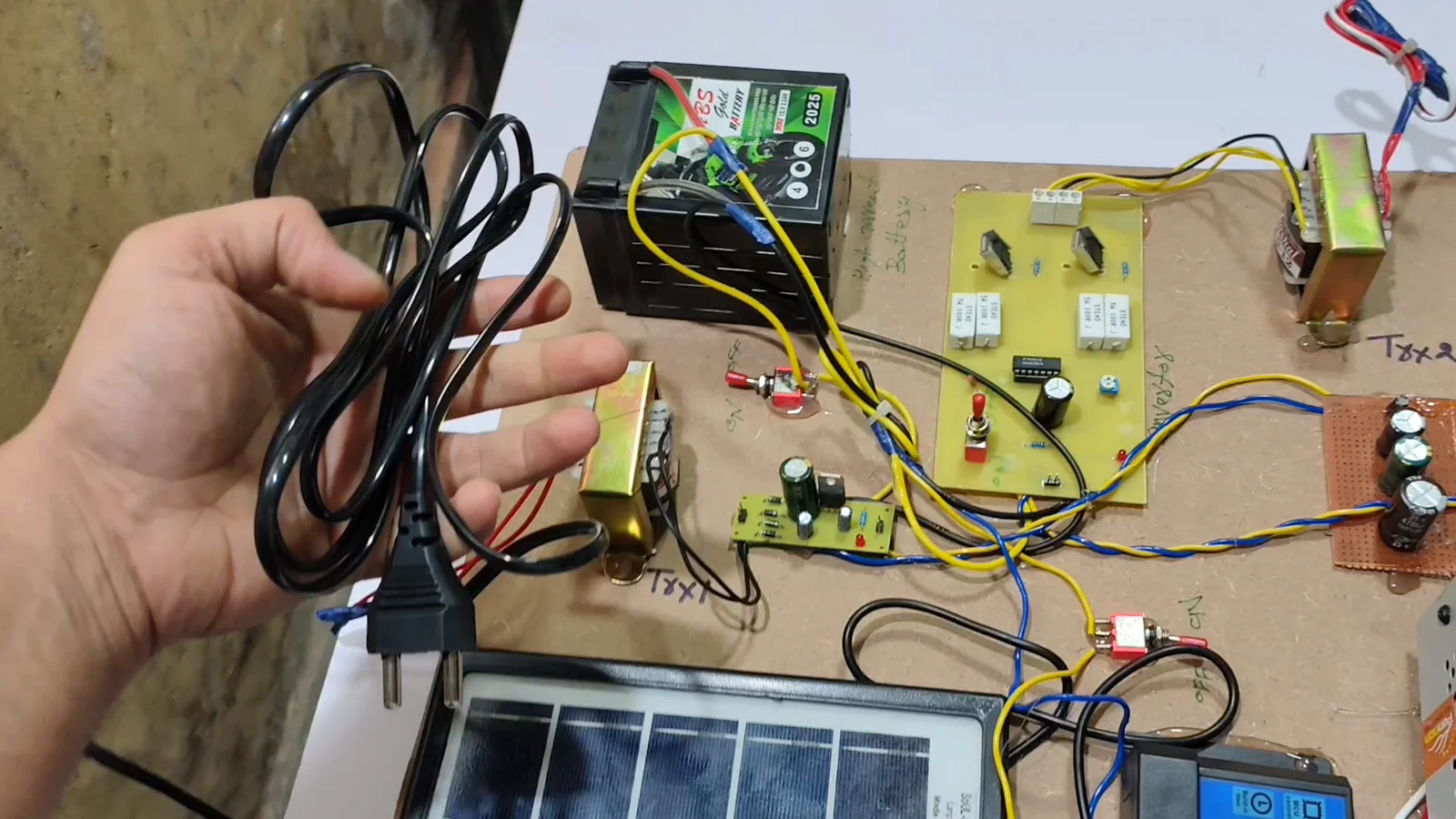
This project stands out because it is ready-to-use, tested for reliability, and designed with a clean hardware layout 🔌📄. It eliminates fabrication stress, reduces project risk, and ensures professional presentation quality. With complete documentation and support, students can focus on learning outcomes and confident submission rather than troubleshooting hardware issues 🚀.
Want to understand how this project works in detail?
🎥 Project Demonstration Video
Hindi Demonstration 👇
🔗 Internal Resource Links
❓ Frequently Asked Questions
Q1. What is the Hybrid Solar Inverter Project and what does it demonstrate?
A. The Hybrid Solar Inverter Project is a ready-to-use hardware system that demonstrates dual battery charging using solar energy and AC mains. It shows how solar power is efficiently managed using MPPT technology while automatically switching to AC charging when solar input is unavailable. This makes it highly relevant for modern renewable energy applications and academic demonstrations.
Q2. Is this project suitable for final-year engineering students and academic evaluation?
A. Yes, this project is specifically designed for Diploma, B.Tech, Polytechnic, ITI, and school students. It is fully assembled, tested, and evaluation-ready, making it ideal for final-year submission, viva examinations, lab assessments, and project exhibitions without requiring additional development.
Q3. What learning outcomes can students expect from this project?
A. Students gain practical understanding of MPPT-based solar charging, hybrid power management, and inverter operation. The project helps bridge the gap between theoretical concepts and real-world implementation, improving confidence during viva and technical discussions.
Q4. Does the project include documentation and presentation material?
A. Yes, the project includes a detailed project report, synopsis, and PPT prepared for academic submission. These materials help students explain the working, applications, and scope of the system clearly during evaluations and presentations.
Q5. Can this hybrid solar inverter project be extended or upgraded in the future?
A. The project offers good scope for future enhancements such as IoT-based monitoring, higher power capacity expansion, or smart energy management features. This makes it suitable not only for academic use but also for innovation, research, and renewable energy experimentation.
| Weight | 5 kg |
|---|---|
| Dimensions | 40 × 40 × 11 cm |
Related products

Electronics Engineering Projects
🦯 Smart Glasses for Blind Assistance with Ultrasonic Sensor and SMS Alert

Electronics Engineering Projects
Wireless Landmine & Metal Detection Robot – Smart Defense Project for Students
Best Selling Engineering Projects
8051 Microcontroller Based Projects
Smart Farming Management System Project for Electrical Engineering
Electrical Engineering Projects
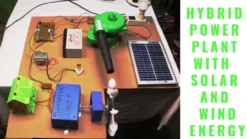
Hybrid Solar and Wind Power Generation System Engineering Project
Electrical Engineering Projects
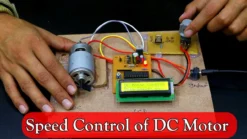
DC Motor Speed Control using Arduino PWM and TIP122 Transistor with LCD Display
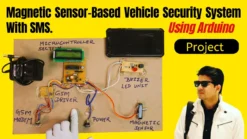
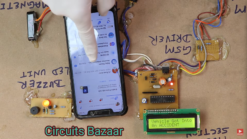
Electronics Engineering Projects
Vehicle Accident Alert System using Magnetic Sensor, Arduino and GSM Modem.
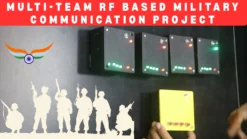
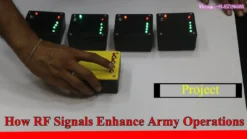
Army & Defence Innovation Projects
Military Wireless Communication Project – Multi-Team RF Command System